An armless office chair can look simple: a seat, a backrest, and a base. Yet small design choices affect comfort, movement, and how well a chair fits a busy workspace. For buyers comparing China’s leading manufacturers, the details matter. Check seat dimensions, height adjustment, upholstery, caster options, weight capacity, and the frame’s stated materials. Ask for current product specifications and test documentation, rather than relying only on polished catalog images. A chair that works beside a narrow desk may feel quite different during a long shift. Fit is personal.
Ergonomist Alan Hedge, a professor emeritus at Cornell University, is often associated with the advice, “The best posture is your next posture.” That principle helps explain why an armless design may suit shared desks and compact rooms: users can move closer to the work surface without armrests getting in the way. Still, removing armrests does not automatically make a chair comfortable. Seat depth, back support, and adjustment range deserve equal attention. This guide introduces ten Chinese manufacturers and the factors that can help distinguish their offerings, including customization, production capability, and communication. Claims should be checked against samples and records where possible. A ranking is only a starting point. Some details may remain unclear until buyers compare models directly.
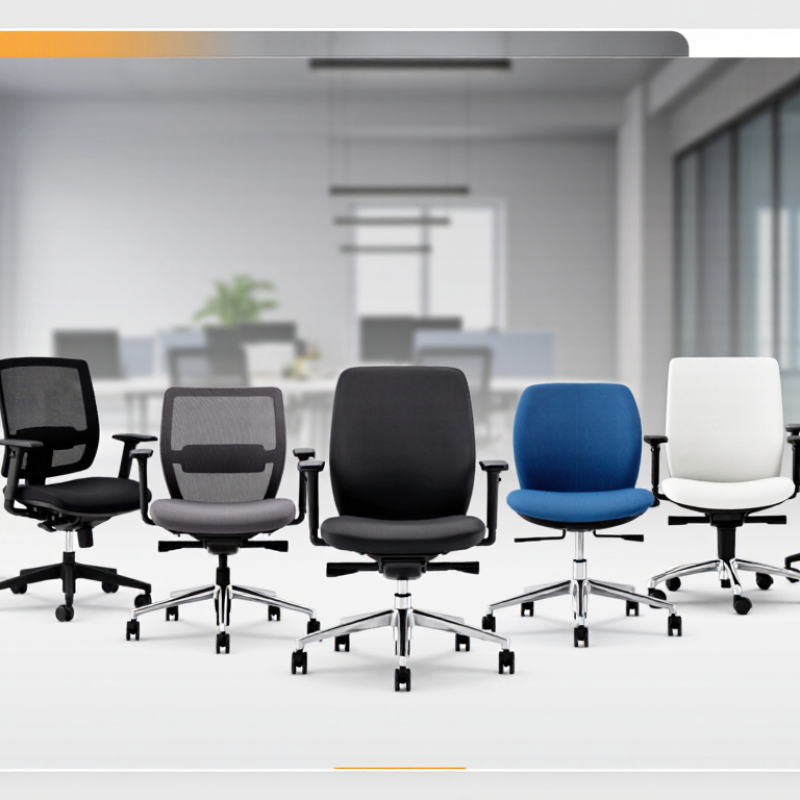
An armless office chair is a task chair without fixed armrests. Its open sides let users move closer to desks, slide beneath narrow tables, and turn more freely. The seat, backrest, base, and adjustment controls still matter; removing arms does not automatically make a chair compact or supportive. Fit depends on seat width, height range, and how long someone sits.
These chairs are often used in shared workrooms, training rooms, reception areas, and home offices with limited floor space. They can also suit meeting rooms where people shift positions often. A worker might roll between a laptop and a side cabinet without an armrest catching the desk edge. Yet prolonged computer work may feel tiring if the seat or back support is poorly matched. It is tempting to treat “armless” as a space-saving feature alone, but comfort varies.
Tips: Measure desk clearance and check seat height before choosing. Sit for several minutes. Do your feet rest flat? Do your shoulders stay relaxed? In shared spaces, check that the casters move smoothly and suit the floor. A small detail, but easy to miss.
A practical overview of ten common armless office chair types and their typical applications. This is a product-category guide, not a ranking of manufacturers.
| No. | Armless Chair Type | Defining Features | Typical Uses | Key Selection Consideration |
|---|---|---|---|---|
| 1 | Task Chair | Compact swivel chair, commonly with a height-adjustable seat and casters; armrests are omitted. | Desks, shared workstations, and home offices. | Check seat-height range, back support, and whether the casters suit the floor. |
| 2 | Ergonomic Task Chair | Usually offers multiple adjustments, such as seat height, backrest position, or lumbar support, without armrests. | Regular computer work and workstations where users prefer unrestricted arm movement. | Prioritize adjustability and a fit that lets the user sit with feet supported and shoulders relaxed. |
| 3 | Armless Mesh Chair | Features a mesh back, which allows airflow through the backrest; seat material and adjustment options vary. | Warm offices, shared desks, and everyday computer use. | Assess mesh tension, back support, and seat cushioning; mesh construction alone does not guarantee ergonomic fit. |
| 4 | Drafting Chair | Designed with a taller seat-height range; some models include a foot ring for added lower-body support. | Raised counters, drafting tables, and standing-height work surfaces. | Match the chair’s height range to the work surface and confirm that the foot ring is positioned comfortably. |
| 5 | Armless Conference Chair | Often has a simple silhouette, with a fixed or swivel base and upholstery or a molded seat. | Meeting rooms, training rooms, and visitor seating areas. | Consider comfort for the expected meeting length, ease of cleaning, and storage needs. |
| 6 | Stacking Chair | A lightweight, usually armless chair designed so multiple chairs can be stacked when not in use. | Training spaces, event rooms, and flexible offices. | Check the stated stacking limit, chair weight, and floor protection requirements. |
| 7 | Folding Chair | Folds for storage and transport; commonly uses a simple frame and a compact seat and back. | Temporary work areas, multipurpose rooms, and occasional seating. | Review the load rating, locking mechanism, and whether the chair is intended for extended sitting. |
| 8 | Armless Visitor Chair | A guest-oriented chair with a non-rolling base in many designs; may be upholstered or have a molded seat. | Reception areas, consultation rooms, and office visitor spaces. | Choose a stable base, durable upholstery, and a seat that suits the expected visit duration. |
| 9 | Armless Saddle Stool | Uses a shaped saddle-style seat and often a height-adjustable pedestal base; it may not include a backrest. | Some clinical, laboratory, and precision-work settings where users move frequently. | Confirm that the seat shape and posture suit the task; suitability varies by user and work duration. |
| 10 | Compact Armless Chair | A space-conscious design without armrests, often intended to slide under a desk or fit into a small workstation. | Small home offices, narrow desks, and space-limited work areas. | Measure the chair, desk clearance, and user space; a compact footprint should not compromise a suitable sitting position. |
Definition: An armless office chair is a work or office chair without armrests. Removing the arms can make it easier to slide under some desks and may allow closer access to a work surface, but comfort and ergonomic suitability depend on the chair’s fit, adjustments, and the user’s tasks. Features differ by model; verify specifications before purchase.
It is a task chair without fixed armrests. Open sides make it easier to move close to a desk or slide beneath a narrow table.
They suit shared workrooms, training rooms, reception areas, meeting rooms, and compact home offices. They can also help when users move between a laptop and a side cabinet.
Often, but not always. The seat width and base still affect its footprint, so measure the available floor space.
Comfort depends on seat depth, height, and back support. A poorly fitted chair can feel tiring after several hours. Open sides alone do not solve that.
Measure desk clearance and check the chair’s height range. Sit for several minutes and see whether your feet rest flat and your shoulders stay relaxed. Small details matter.
Ask for test records for the exact model, including stability, load capacity, and durability results. Similar-looking frames may use different materials.
Check for incoming-material inspections, production checks, and traceable final testing. Ask how defects are recorded and corrected. One factory visit proves little.
Get minimum order quantities, sample lead times, packaging protection, and spare-part availability in writing. Compare records across suppliers; photos can mislead.
This article explains what an Armless Office Chair is, how its compact, open-sided design suits settings such as small offices, meeting rooms, training spaces, and shared work areas, and what features buyers may want to consider. It also outlines how China’s manufacturing sector serves different needs, from standardized production to customized designs, and describes practical criteria for evaluating manufacturers, including product quality, production capacity, customization options, communication, and delivery planning.
The article profiles ten leading manufacturers without focusing on brand promotion, highlighting the kinds of products and capabilities buyers can compare. It concludes with a practical framework for assessing chair models and suppliers side by side, helping readers match seating requirements, expected order volumes, and supply needs with a suitable manufacturing partner.

 YIKE