China has become a major sourcing center for ergonomic workplace furniture. Its manufacturers serve offices, coworking spaces, call centers, and home workstations worldwide. This guide introduces ten notable Chinese Adjustable Office Chair manufacturers for buyers comparing quality, design, and production capability.
The selection considers practical factors, not marketing language alone. These include lumbar support, seat depth, armrest movement, tilt control, gas-lift quality, and base stability. Manufacturing experience also matters. A reliable supplier should explain material choices, testing procedures, minimum order quantities, and after-sales support clearly. Factory audits, product samples, and recognized safety certifications can provide useful evidence, although paperwork never tells the whole story.
Some manufacturers focus on high-volume commercial orders. Others offer refined designs, private-label services, or flexible customization. Their strengths may differ across price, comfort, delivery speed, and quality control. Buyers should compare showroom claims with real sitting tests. A chair may look impressive for five minutes, yet feel uncomfortable after a full workday.
This article is not an unquestionable ranking. Supplier capabilities can change, and public information may remain incomplete. That limitation deserves attention. Each company should be verified through current samples, factory communication, inspection records, and written specifications. The goal is a practical starting point for importers, distributors, and office buyers seeking dependable products from China. Comfort is personal. Consistency is measurable.
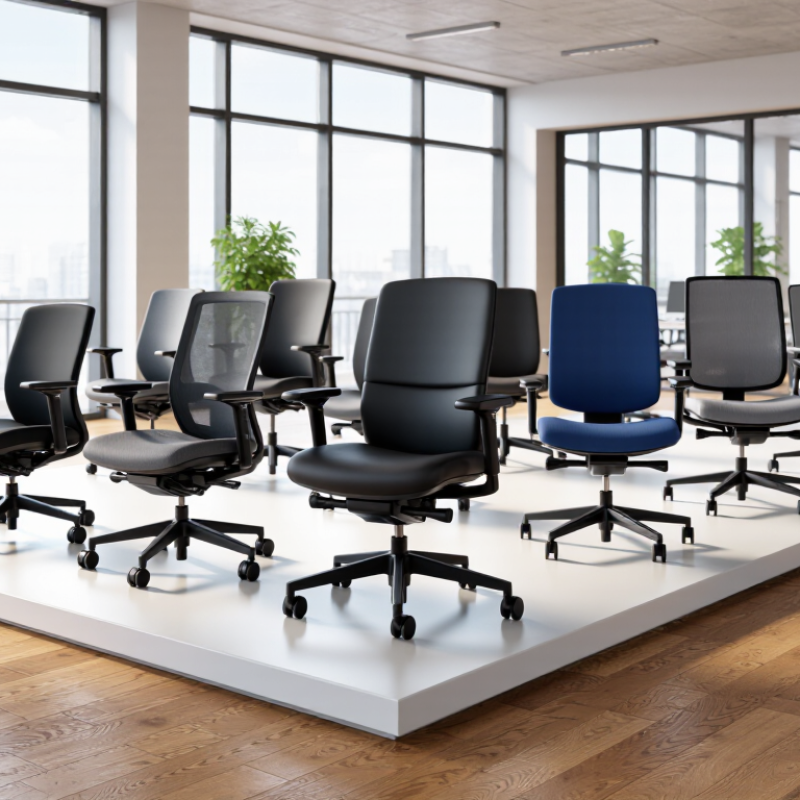
What Defines an Adjustable Office Chair Manufacturer?
China Top 10 Adjustable Office Chair Manufacturers?
What Defines an Adjustable Office Chair Manufacturer?
A genuine adjustable office chair manufacturer does more than assemble parts. It engineers posture support, tests mechanisms, and controls production consistency. According to Grand View Research’s 2024 office furniture analysis, the global market may grow at about 5.5% annually through 2030. That growth increases pressure to prove capability, not merely display attractive catalogs.
Look for measurable adjustments. Seat height should move smoothly. Seat depth, lumbar support, armrests, and recline tension should suit different body sizes. ANSI/BIFMA X5.1 testing covers stability, durability, and structural performance for general-purpose office chairs. Reliable manufacturers should provide test records, material specifications, weight limits, and inspection procedures. Vague claims are warning signs.
Factory evidence matters. Check whether the supplier owns tooling, conducts load testing, and traces components by batch. A serious team can explain foam density, gas-lift classification, base strength, and replacement-part availability. It should also discuss packaging damage and warranty handling honestly. Certification alone is not enough. A chair can pass a laboratory test yet feel uncomfortable after six hours. This is where evaluations often become imperfect. Real users, independent samples, and long-term feedback still matter more than polished photographs.
China Top 10 Adjustable Office Chair Manufacturers? — What Defines an Adjustable Office Chair Manufacturer?
The chart presents a practical supplier-evaluation framework rather than company rankings. An adjustable office chair manufacturer is typically defined by measurable ergonomic adjustment options, mechanism durability, safety testing, load capacity, material consistency, quality management, customization capability, production control, after-sales support, and compliance with applicable office-furniture standards.
How to Evaluate Chinese Office Chair Manufacturers
China Top 10 Adjustable Office Chair Manufacturers?
Evaluating Chinese office chair manufacturers requires more than comparing catalog prices. Start with factory experience, production capacity, and product knowledge. Ask how long the facility has produced adjustable chairs. Request photos of assembly lines, testing equipment, and worker training. Look closely. A polished showroom proves little if the factory cannot explain mechanism durability.
Check technical details carefully. The chair should support safe height adjustment, stable reclining, and reliable caster movement. Ask for load-test records, material specifications, and inspection procedures. Independent laboratory reports are more useful than vague quality promises. Confirm whether samples match mass-production units. Small differences can become expensive problems.
Communication also reveals operational reliability. Measure response speed, quotation accuracy, and willingness to discuss weaknesses. A professional supplier should explain lead times, packaging methods, replacement parts, and warranty handling. Ask for a sample before signing a large order. Test it for several weeks, not just one afternoon. My first supplier evaluation focused too heavily on appearance. Later, loose armrests and uneven gas lifts changed my view. That experience taught me to document every requirement in writing. Still, factory audits are not perfect. Staff may prepare for visitors, and records can be incomplete. Repeat inspections and third-party verification provide stronger evidence. Consider the manufacturer’s export experience, but do not treat it as automatic proof of quality. Reliable partnerships develop through transparent evidence, consistent samples, and realistic problem-solving.
China’s Top 10 Adjustable Office Chair Manufacturers
China’s Top 10 Adjustable Office Chair Manufacturers
China’s top 10 adjustable office chair manufacturers are best assessed through evidence, not advertising claims. Industry reports from Grand View Research and Mordor Intelligence indicate steady growth in global office furniture demand, driven by ergonomic seating and hybrid workspaces. This growth has increased pressure on Chinese factories to improve adjustment systems, durability, and export compliance.
The strongest manufacturers usually operate in Zhejiang, Guangdong, and Jiangsu. Their product lines often include seat-height, lumbar-support, armrest, and tilt-tension adjustments. Serious buyers should request ISO 9001 records, BIFMA or EN 1335 test results, and factory audit documents. A useful inspection should examine gas lifts, caster performance, base strength, stitching, and foam recovery. Small details matter. A loose armrest becomes obvious after six months.
The leading ten suppliers also differ in real manufacturing depth. Some control injection molding and metal fabrication internally, while others outsource key components. That difference can affect lead times and consistency. Procurement teams should compare sample chairs with mass-production units, not rely on catalogs. Warranty terms, replacement-part availability, annual capacity, and container loading plans deserve equal attention. Industry forecasts are helpful, but they cannot verify every supplier. That remains a weakness in many online rankings. A careful shortlist should combine report data, third-party testing, factory visits, and customer references before placing a large order.
Key Differences in Products, Services, and Production Capabilities
Comparing China’s top ten adjustable office chair manufacturers requires more than catalog photos. Product differences appear in mechanisms, frame materials, lumbar support, and adjustment range. One chair may offer a synchronized tilt system, while another uses a simpler lockable recline. Mesh tension, seat-foam density, armrest movement, and cylinder certification also affect daily comfort. I have found that small details matter: a seat sliding five centimeters can reduce pressure during long work sessions. Marketing claims can be vague. Test records matter more.
Service separates capable suppliers from attractive listings. Experienced manufacturers provide dimensional drawings, load-test reports, sample approval, and clear replacement-part policies. Ask how quickly they answer a damaged-armrest case. A reliable team should explain warranty limits without hiding exclusions. Communication quality is evidence. Some suppliers support custom colors, logo-free packaging, or regional assembly instructions. Others accept customization but lack stable engineering review. That gap can create delays, inconsistent batches, or expensive revisions.
Production capability is visible in the factory process. Check whether injection molding, foam cutting, metal finishing, and final assembly are controlled in-house or outsourced. A documented inspection plan should cover wheel strength, gas-lift retention, tilt-cycle durability, and carton drop testing. Automated lines may improve consistency, but manual inspection still catches loose screws and uneven mesh. Factory visits are useful, though not perfect. A polished showroom can distract from weak process control. I would compare pilot samples with mass-production units, then review defect rates, lead times, and corrective-action records before placing a large order. Even strong manufacturers can miss a detail.
How to Choose the Right Manufacturer for Your Business
China Top 10 Adjustable Office Chair Manufacturers
Choosing among China’s top ten adjustable office chair manufacturers requires more than comparing catalog prices. A reliable supplier should explain its frame materials, gas lift grade, foam density, and adjustment testing process. Ask for a working sample, not only polished product photos. Sit on it for several hours. Check whether the lumbar support slips, the armrests wobble, or the casters mark the floor.
Request factory documents, recent inspection records, and evidence of consistent production capacity. An on-site audit or independent inspection can reveal crowded assembly areas, weak packaging, or outsourced components. Confirm the manufacturer’s minimum order quantity, sample charges, lead time, payment terms, and replacement policy in writing. Clear communication matters. Delayed answers may become delayed shipments.
A capable partner should adapt dimensions, fabrics, colors, labels, and carton protection without hiding extra costs. Discuss compliance requirements for every destination before production begins. Testing should cover load capacity, repeated reclining, wheel durability, and fire-related material standards where applicable. Video calls help, but they are not enough. A spreadsheet can mislead. One uncomfortable lesson is that the cheapest quotation may create expensive returns later. It is also wise to begin with a controlled trial order, then compare defect rates and customer feedback before expanding volume. Availability should be checked carefully, because some factories present trading capacity as manufacturing strength.
FAQS
It engineers posture support, tests mechanisms, and controls production consistency. It should provide material details, weight limits, and inspection records.
Check seat height, seat depth, lumbar support, armrests, and recline tension. A five-centimeter seat adjustment can reduce pressure during long work sessions.
Testing records show evidence of stability, durability, and structural performance. Ask for load tests, tilt-cycle results, and gas-lift retention data.
No. A chair may pass laboratory testing yet feel uncomfortable after six hours. Independent samples and long-term user feedback remain important.
Check foam cutting, injection molding, metal finishing, and final assembly. Confirm which processes happen in-house and which are outsourced.
Ask about sample approval, technical drawings, replacement parts, and warranty limits. Request a clear response process for a damaged armrest.
Look for batch tracing, load testing, inspection plans, and carton drop testing. Compare pilot samples with mass-production units.
A polished showroom can hide weak process control. Factory visits help, but they are not perfect. Defect rates and corrective-action records matter more.
Conclusion
This guide explores what defines a reliable Adjustable Office Chair manufacturer in China, focusing on product design, ergonomic functionality, material quality, customization options, quality control, and production consistency. It explains how buyers can evaluate manufacturers by reviewing their technical capabilities, certifications, sample processes, communication, order flexibility, lead times, and after-sales support. The article also presents a practical overview of China’s top 10 Adjustable Office Chair manufacturers without focusing on brand names, helping readers understand the range of suppliers available for different business needs.
In addition, the guide compares manufacturers according to product variety, service capabilities, production scale, pricing structure, customization support, and export experience. It concludes with a clear selection framework for importers, distributors, office furniture companies, and project buyers. By matching a manufacturer’s strengths with target market requirements, budget, order volume, design expectations, and delivery schedule, businesses can build a more dependable supply chain and choose a suitable long-term manufacturing partner.

 YIKE
YIKE