Choosing the right China Top High Back Office Chair Suppliers requires more than comparing prices on a product page. Global buyers must examine construction, ergonomic design, factory capability, and long-term service. A dependable supplier should explain materials clearly, provide consistent specifications, and support product testing before shipment.
A quality High Back Office Chair often combines a steel or reinforced frame, molded foam, adjustable lumbar support, and a stable five-star base. Buyers should inspect stitching, caster movement, recline control, and gas-lift documentation. A chair may look impressive under showroom lights, yet feel uncomfortable after six hours at a workstation. Practical sampling matters.
This guide introduces key Chinese suppliers and the capabilities buyers should verify. It considers production experience, quality-control procedures, customization options, packaging standards, and communication reliability. Factory visits, video inspections, and independent testing can reveal details that brochures omit. Small details matter.
No supplier list is perfect. Market conditions change, and even experienced factories may have inconsistent batches. Buyers should request current certifications, reference projects, production photos, and pre-shipment inspection records. Clear contracts should define materials, tolerances, warranty terms, and replacement responsibilities.
The strongest sourcing decision balances comfort, durability, compliance, and total landed cost. It also respects the user’s daily experience. A well-designed chair should support the back without creating pressure points, remain stable on different floors, and arrive protected from moisture and impact. This introduction provides a practical starting point for global buyers seeking reliable Chinese partners.
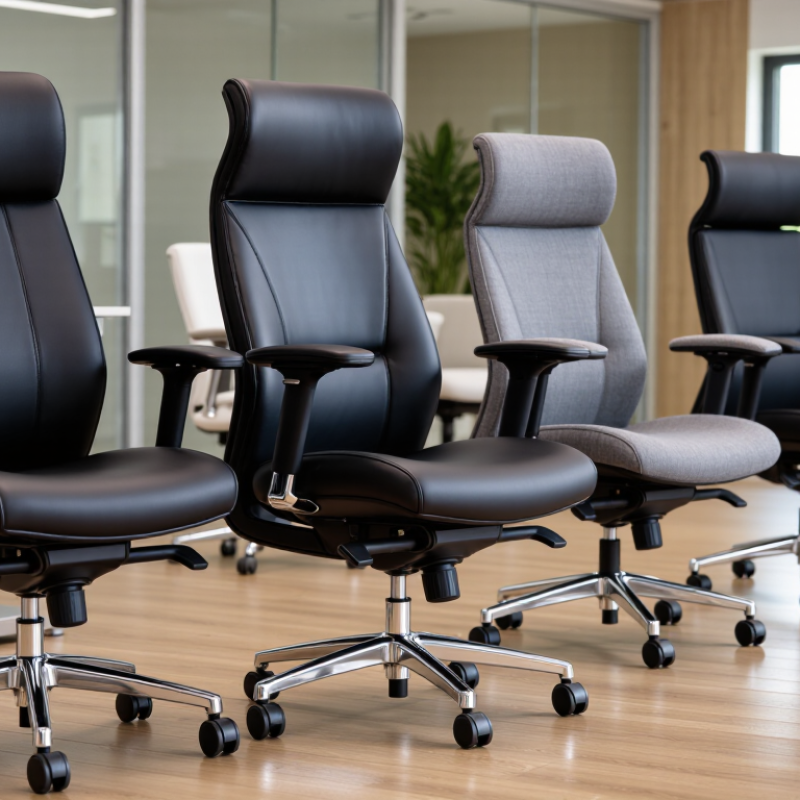
A high back office chair supplier in China is defined by more than a polished catalog. Buyers need evidence from the factory floor. A reliable supplier explains frame materials, foam density, gas lift grades, and base strength clearly. They can provide product drawings, test records, and sample measurements before large orders. Small details matter. Does the backrest support the shoulders? Does the lumbar mechanism remain stable after repeated adjustment? Experienced suppliers answer these questions with data, not vague promises.
Professional production includes incoming material checks, assembly inspections, and functional testing. Ask how each batch is inspected, who records defects, and what happens when a sample fails. A capable team should discuss load testing, rolling cycles, recline durability, and packaging protection. They should also understand destination-market requirements and provide accurate documents. This is where real expertise shows. Not in photographs.
Global buyers should assess communication as carefully as manufacturing capacity. Clear quotations should state dimensions, tolerances, minimum order quantities, lead times, spare parts, and payment terms. A dependable supplier reports delays early and keeps revision history for approved samples. Yet no supplier is flawless. Color variation, carton damage, or a changed component can still appear. That risk deserves an honest conversation. Request a pilot order, inspect random units, and record corrective actions. A supplier earns authority through repeatable work, transparent evidence, and support after delivery, not through confident language alone.
A practical buyer-evaluation framework for comparing export-oriented suppliers without relying on company or brand data.
The percentages represent a recommended procurement weighting when screening Chinese high-back office chair suppliers. Product compliance should be verified against applicable requirements such as EN 1335, ANSI/BIFMA standards, REACH, and relevant local regulations. Buyers should also request test reports, quality-control records, material traceability, export documentation, and production samples before placing an order. These weights are evaluation guidance, not company performance or market-share statistics.
China’s high-back office chair supply base is concentrated in several practical manufacturing regions. Zhejiang, especially Anji, is known for complete chair production and flexible OEM assembly. Guangdong offers stronger export infrastructure, tooling, and material networks. Jiangsu and Shandong also support metal parts, mechanisms, foam, and upholstery production.
Regional strength affects lead time and customization. A supplier near Ningbo or Shenzhen can usually coordinate container loading efficiently. A capable factory should show tested gas lifts, tilt mechanisms, base strength, and caster performance. The BIFMA Industry Sustainability Report highlights the growing importance of durability, material transparency, and responsible production in commercial furniture. These checks matter more than polished showroom photos.
Market data also supports careful sourcing. Grand View Research estimated the global office furniture market at about USD 58 billion in 2022, with continued demand for ergonomic seating. That growth attracts many new suppliers. Not every supplier deserves a factory visit. Buyers should request ISO 9001 records, load-test reports, sample inspection data, and clear warranty terms. CSIL’s global office furniture research repeatedly identifies China as a major production and export center, but regional capability still varies widely. A mistake here is easy: assuming a trading office owns the factory. Video audits help, although they cannot replace physical inspection. High-back models should be checked with a real user, adjustable lumbar support, and a desk-height test.
Global buyers assessing high-back office chairs from China should examine more than leather texture and showroom photos. Request material specifications, load ratings, adjustment ranges, and test reports. A reliable supplier can explain who performed each test and when. Check report numbers against the product version. A chair may pass testing, yet fail after repeated daily use. That gap matters. Ask for samples from mass production, not a specially polished unit.
Inspect the frame, five-star base, casters, gas lift, armrests, and recline mechanism. Sit for two hours if possible. Listen for clicks, wobble, and uneven resistance. Measure seat height and lumbar movement with simple tools. Foam density and fabric abrasion results should match the intended climate and usage. Humid offices expose weak coatings quickly. Compliance also requires market-specific review. Confirm applicable safety, chemical, labeling, packaging, and electrical requirements when powered functions are included. Keep declarations, invoices, test records, and revision histories together.
Supplier audits should cover incoming inspection, worker training, calibration records, and corrective actions. Ask how defects are contained before shipment. A clear answer is more valuable than a perfect presentation. Still, audits have limits. One visit cannot represent every production month. Use pre-shipment sampling and independent inspection for larger orders. Define acceptance limits for scratches, stitching, noise, and missing hardware. Record photographs and serial numbers. Trust grows from evidence, though evidence can be incomplete. Recheck critical claims whenever the design changes.
| Evaluation Dimension | Quality or Compliance Metric | Recommended Benchmark for High-Back Office Chairs | Verification Evidence to Request | Typical Risk if Not Verified | Evaluation Weight | Priority |
|---|---|---|---|---|---|---|
| Ergonomic Seat Height | Adjustable seat height measured from the floor to the compressed seat surface | Approximately 400–520 mm, with the final range matched to the intended user population | Dimensioned technical drawing, product sample inspection, adjustment-cycle test record | Inadequate leg support, pressure behind the knees, and poor desk compatibility | 10% | High |
| Seat Width and Depth | Usable seat dimensions and support for different body sizes | Usable width generally at least 450 mm; adjustable or suitable depth commonly around 400–480 mm | CAD drawing, dimensional inspection report, seat-pan measurement from production samples | Restricted movement, insufficient thigh support, or excessive pressure at the knee area | 8% | High |
| Backrest Height and Lumbar Support | Backrest coverage, lumbar contour, and support adjustability | High-back design should support the upper and lower back; adjustable lumbar support is preferred for multi-user workplaces | Ergonomic specification sheet, adjustment range, user trial records, product photographs | Back fatigue, poor posture support, and inconsistent comfort between users | 10% | High |
| Armrest Performance | Height, width, depth, pivot, and pad durability where applicable | At least height adjustment is recommended; multi-directional adjustment is preferred for intensive computer use | Adjustment-range chart, load test report, sample inspection, replacement-part specification | Shoulder strain, unstable arm support, and early breakage of adjustment mechanisms | 7% | Medium |
| Mechanism and Recline | Backrest recline, locking positions, tension control, and synchronized movement | Smooth operation without excessive side play; locking and tension functions should remain stable throughout the declared service life | Mechanism drawings, cycle-test results, functional inspection checklist, warranty terms | Unexpected reclining, noise, loss of control, or premature mechanism failure | 10% | High |
| Structural Strength | Static, impact, durability, and stability performance of the complete chair | Testing should follow an applicable edition of ANSI/BIFMA X5.1 or EN 1335, with test loads and cycles reported by the laboratory | Laboratory test report showing model number, tested configuration, test date, laboratory identity, and pass/fail results | Frame cracking, base failure, instability, or liability exposure in the destination market | 15% | High |
| Base, Casters, and Stability | Five-star base strength, caster rolling performance, and anti-tip stability | Base and casters should be tested as a complete assembly; caster type must match the floor surface and intended load | Component test records, material specification, caster load rating, stability-test documentation | Uneven rolling, floor damage, tipping, or caster detachment | 8% | High |
| Gas Lift Cylinder | Lift-cylinder safety, retention, and cycle durability | Cylinder performance should be validated in the assembled chair and comply with the applicable chair standard or market requirement | Gas-lift supplier specification, retention test, cycle test, batch traceability, incoming inspection record | Sudden height loss, cylinder separation, or serious user-safety incident | 10% | High |
| Upholstery and Foam | Foam density, resilience, seam quality, abrasion resistance, and dimensional consistency | Foam specification must be declared by density and hardness; upholstery performance should match the expected commercial-use intensity | Foam test report, material composition, abrasion result, colorfastness result, production sample comparison | Seat sagging, fabric pilling, color variation, odor complaints, or inconsistent comfort | 7% | Medium |
| Chemical and Material Compliance | Restricted substances, material declarations, and market-specific chemical requirements | Provide current documentation for applicable requirements such as EU REACH; additional requirements depend on the destination country and product materials | Third-party chemical test report, supplier declarations, bill of materials, batch traceability | Customs delays, product recalls, non-compliance penalties, or restricted-market rejection | 10% | High |
| Fire Safety | Flammability performance of upholstery, foam, and assembled seating | Use the fire-safety test method required by the destination market; requirements vary by country, application, and public-use environment | Material and finished-product flammability reports, test method, specimen description, laboratory accreditation | Import rejection, contract non-acceptance, or elevated fire risk | 6% | High |
| Manufacturing Quality Control | Incoming inspection, in-process controls, final inspection, and nonconformity handling | Documented inspection plan with measurable acceptance criteria, sampling method, corrective-action records, and traceability | Quality manual, control plan, inspection checklist, nonconformity report, corrective-action evidence | Unstable quality between batches and high defect rates after delivery | 8% | High |
| Packaging and Transit Protection | Protection against compression, impact, moisture, abrasion, and hardware loss | Packaging should protect critical components during container handling and include clear assembly and parts identification | Packaging specification, drop or vibration test where applicable, carton photos, loading plan | Scratched upholstery, bent components, missing hardware, and costly replacement claims | 5% | Medium |
| Documentation and Traceability | Consistency between the approved sample, production model, reports, labels, and shipping documents | Every report should identify the exact model, revision, tested configuration, date, and applicable standard | Approved sample record, model-code system, inspection reports, packing list, certificate-of-conformity package | Difficulty proving compliance or identifying affected batches during a claim | 4% | Standard |
| Warranty and Spare Parts | Warranty coverage, response time, replacement components, and after-sales process | Written warranty should define coverage, exclusions, claim evidence, response time, and availability of critical parts | Warranty policy, spare-parts list, service-level agreement, historical claim data with customer details removed | Long downtime, unresolved defects, and high total cost of ownership | 2% | Standard |
Sourcing high back office chairs from China requires more than comparing catalog prices. Experienced buyers usually request factory photos, material samples, and recent inspection records. A reliable supplier should explain frame strength, foam density, gas-lift grade, and warranty terms clearly. Ask for test reports when chairs will serve intensive daily use.
Customization can cover fabric color, lumbar support, armrest design, caster type, and logo placement. Some suppliers accept small changes, while others require new molds or production fixtures. Every modification affects cost and lead time. A sample chair should be approved before bulk production begins. This step prevents expensive surprises. Still, samples may not perfectly represent mass production, so random inspections remain useful.
Pricing usually depends on materials, order volume, packaging, testing, and shipping terms. A low quotation may exclude export cartons or replacement parts. Request a detailed pro forma invoice with every charge listed. Minimum order quantities vary by customization level. Standard colors may allow lower quantities, while special fabrics can require hundreds of units. Small businesses should negotiate a pilot order, although the unit price may increase. That trade-off is often acceptable. Suppliers should also confirm production capacity, payment milestones, and delivery schedules in writing. Mistakes happen. Clear records make them easier to correct.
Import logistics should be checked before price negotiations. UNCTAD’s Review of Maritime Transport 2023 states that over 80% of global merchandise trade moves by sea. For high-back office chairs, buyers should confirm carton dimensions, container loading plans, port options, and export documents. The World Bank’s 2023 Logistics Performance Index covered 139 countries and assessed customs, infrastructure, tracking, and timeliness. Ask suppliers for shipment milestones, not vague promises. A small mistake in carton measurements can create expensive freight adjustments.
Warranty support needs written limits. Request coverage periods, spare-part availability, response times, and evidence of previous claims. A supplier should explain whether replacement parts, labor, or return freight are included. Ask for photos and batch records when defects occur. Keep samples from the approved production lot. They help compare seat foam, gas-lift movement, stitching, and wheel durability later. The best document is useless if nobody answers after delivery.
Supplier verification requires more than a polished website. Check registration details, production capacity, inspection records, and recent export experience. Use an independent factory audit and pre-shipment inspection when the order is substantial. ISO 9001 certification can support process confidence, but it does not guarantee chair quality. That distinction matters. I have seen verification checklists overlook after-sales staffing. Buyers should test the service process before ordering: send a technical question, request a corrective-action sample, and measure the reply time. Slow replies are data too.
Request drawings, material specifications, foam density, test records, and sample measurements. Photographs are not enough. The supplier should explain frame strength, gas-lift grades, and base durability with clear data.
Request samples from normal production, not specially prepared units. Check the frame, casters, armrests, recline mechanism, and five-star base. Sit for two hours. Listen for clicking, wobbling, or uneven resistance.
Measure seat height, lumbar movement, backrest width, and adjustment ranges. The backrest should support the shoulders without forcing an awkward posture. Simple measuring tools can reveal inconsistent dimensions.
Ask for load testing, rolling cycles, recline durability, and adjustment tests. Check the report date and product version. A chair can pass testing yet weaken after daily use.
Ask about incoming material checks, assembly inspections, calibration records, and worker training. The supplier should record defects and corrective actions. Ask what happens when a sample fails.
Confirm applicable safety, chemical, labeling, packaging, and electrical requirements. Keep declarations, invoices, test reports, and revision histories together. Requirements vary by destination. Recheck them when the design changes.
Confirm carton dimensions, container loading plans, port options, export documents, and shipment milestones. Small carton errors can create unexpected freight costs. Ask for dates, not vague assurances.
Request coverage periods, spare-part availability, response times, and return-freight responsibilities. Ask whether labor and replacement parts are included. Keep approved production samples for later comparison.
No. One visit cannot represent every production month. Use pre-shipment sampling and independent inspection for larger orders. Evidence helps, but it remains incomplete.
Send a technical question and request a corrective-action sample. Measure the reply time and clarity. Slow replies are useful data. Still, response speed alone cannot prove long-term support.
China’s top High Back Office Chair suppliers serve global buyers through a combination of advanced manufacturing, flexible production, and export experience. Reliable suppliers typically offer ergonomic designs, stable material quality, modern production equipment, and strict quality-control procedures. Key manufacturing regions may differ in specialization, but capable factories can support commercial orders, private-label projects, and customized specifications. Buyers should evaluate frame strength, upholstery, cushioning, mechanisms, load capacity, safety testing, and relevant compliance documentation before placing an order.
Customization options may include dimensions, colors, fabrics, logos, packaging, and functional features, while pricing depends on materials, design complexity, order volume, and minimum order requirements. International buyers should also confirm production lead times, shipping terms, export documentation, warranty coverage, replacement policies, and after-sales communication. Factory audits, product samples, video inspections, certifications, and clear contracts can help verify supplier credibility and reduce purchasing risks. A careful comparison of quality, service, total landed cost, and long-term support enables buyers to establish a dependable sourcing partnership.

YIKE