Choosing among the Top 10 Leather Office Chairs for Global Buyers requires more than attractive photographs. A Leather Office Chair should support long working sessions, suit different body types, and remain practical across changing climates. This guide examines seating comfort, leather quality, frame strength, adjustment range, and after-sales support. Small details matter. A firm seat can feel supportive during a short test but become uncomfortable after six hours.
Global purchasing also requires careful product verification. Buyers should review material descriptions, weight capacity, warranty terms, packaging protection, and replacement-part availability. Genuine leather, corrected-grain leather, bonded leather, and synthetic alternatives do not offer the same durability or maintenance needs. Regional safety expectations may also differ, so buyers should confirm current documentation with manufacturers and local professionals. Clear specifications build trust.
Real experience often reveals what studio images hide. Creaking armrests, warm surfaces, weak caster wheels, or complicated assembly can change the buying decision. No single chair fits every office, budget, or climate. That matters. Some product information may remain incomplete, especially when suppliers use broad terms such as “premium leather.” Readers should question vague claims and request samples or test reports when possible. The following selection balances comfort, construction, value, and international purchasing practicality, while recognizing that personal posture, desk height, and daily use can produce different results. A strong chair is not merely luxurious; it should perform reliably after the showroom impression fades.
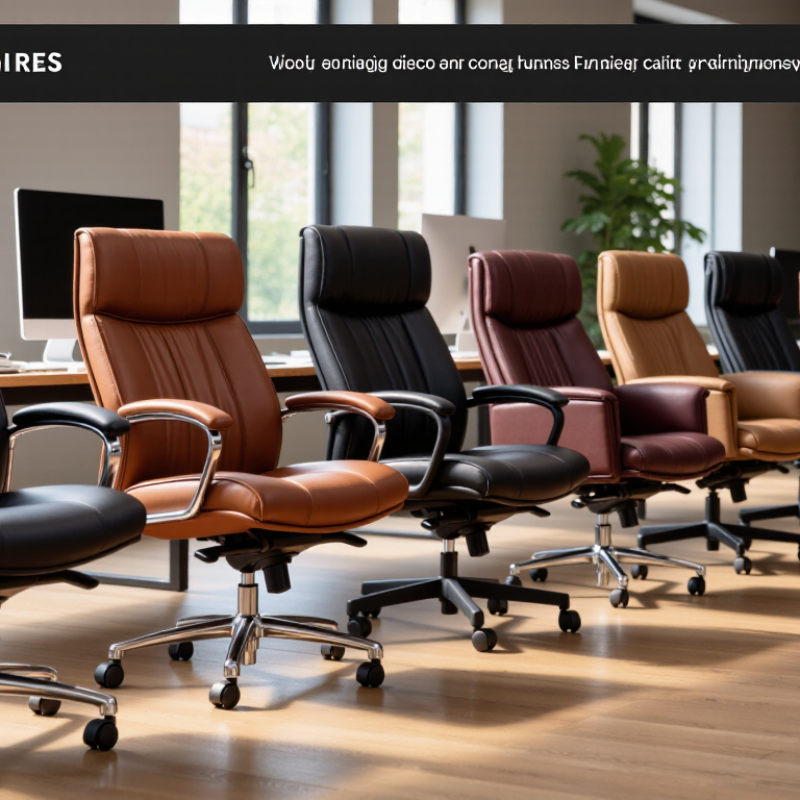
Leather Office Chair Types and Their Main Features
Top 10 Leather Office Chairs for Global Buyers
Leather office chairs differ in purpose, support, and surface performance. Executive chairs usually have high backs, padded armrests, and generous cushioning. They suit private offices but may feel bulky in compact workspaces. Ergonomic leather chairs add adjustable lumbar support, seat depth, and synchronized recline. These features help users change posture during long working hours. Task chairs are lighter and easier to move. Mid-back models fit shared offices, while high-back designs provide stronger shoulder support. Guest chairs often use fixed frames and firm padding for short meetings. Reclining chairs offer comfort, but their mechanisms need careful inspection.
Leather type also affects daily use. Full-grain leather develops visible character and usually resists wear well. Top-grain leather feels smoother and offers a more consistent appearance. Bonded leather can reduce cost, yet its surface may peel sooner under heat and friction. Some products use leather only on contact areas, with synthetic material elsewhere. Buyers should confirm this detail. A chair can look luxurious and still disappoint after six months.
Seat width, foam density, base strength, and caster quality deserve equal attention. No chair fits every desk.
Tips: Request material samples, technical drawings, and load-test information before ordering. Check seat height against the target desk. In humid regions, ventilation and breathable panels may matter more than thick padding. In dry climates, conditioning can help preserve natural leather. Confirm packaging, replacement parts, warranty terms, and cleaning instructions. Small omissions create expensive problems. Inspect stitching, tilt control, and underside finishing in product photos. Surface color may vary between batches, so allow reasonable tolerance.
Key Materials, Construction Standards, and Comfort Factors
Top 10 Leather Office Chairs for Global Buyers
A reliable leather office chair begins with honest material information. Full-grain leather usually shows natural markings and develops a deeper patina over time. Top-grain leather feels smoother after surface finishing. Bonded leather may cost less, but it can wear faster under daily use. Buyers should ask for material percentages, coating details, and sample photos before placing large orders.
Construction matters as much as appearance. Look for a reinforced steel or hardwood frame, stable five-star bases, and tested tilt mechanisms. Strong stitching should remain even around armrests and seat edges. A chair should support the lower back without forcing an unnatural posture. Adjustable seat height, armrests, and lumbar support improve fit across different body types. Dense foam can feel firm at first, yet very soft foam may flatten sooner. Comfort is difficult to judge from photographs alone. I have learned that impressive padding does not always mean long-term support.
Tips:
Request a sitting test or detailed video. Check cushion recovery after repeated compression. Confirm weight capacity, caster quality, warranty terms, and replacement-part access. For international purchasing, verify packaging protection and climate suitability. Leather may dry or crack in low-humidity offices. Keep expectations realistic. Even a well-built chair needs careful adjustment and occasional maintenance.
How to Evaluate the Top 10 Chairs for Global Buyers
How to Evaluate the Top 10 Chairs for Global Buyers
Evaluating the top ten leather office chairs requires more than comparing photos and prices. Create a weighted scorecard for lumbar support, seat depth, armrest range, recline control, and stability. EU-OSHA’s ESENER-2019 survey identified prolonged sitting as a workplace risk in 61% of establishments. A chair should support posture without forcing one fixed position. Measure twice. A ten-minute showroom test helps, but it cannot reveal pressure after eight hours. Ask for adjustment diagrams, load-test evidence, and independent testing against applicable ANSI/BIFMA standards.
Material inspection matters equally. Check whether the leather is full-grain, corrected-grain, or bonded, because durability and repair options differ sharply. Request abrasion, colorfastness, foam-density, and frame-corrosion results. Claims need proof. Global buyers should also compare carton dimensions, net weight, replacement-part availability, warranty exclusions, and lead times. Those details can change the landed cost more than the advertised discount. For international shipments, confirm packaging protection and destination-market safety documentation. Fire-performance requirements vary by country, so generic certificates may be insufficient.
I would not rank a chair highly for appearance alone. Warm leather can feel pleasant in a cold office, yet uncomfortable in humid climates. Ventilation and surface treatment deserve practical testing. My scorecard may still miss long-term squeaks or peeling after repeated cleaning. That limitation should be disclosed, not hidden. Reference checks from existing offices are often more credible than polished product claims.
Top 10 Leather Office Chairs for Global Buyers - How to Evaluate the Top 10 Chairs for Global Buyers
A neutral comparison framework based on commonly published office-chair specifications, international ergonomic criteria, durability considerations, and global purchasing requirements.
| Rank |
Chair Profile |
Upholstery |
Seat Height |
Seat Width / Depth |
Recline Range |
Lumbar Support |
Armrest Adjustment |
Recommended User Height |
Weight Capacity |
Typical FOB Price Range |
Best Use |
Evaluation Score |
| 1 |
High-Back Executive Chair |
Top-grain leather or premium leather equivalent |
45–55 cm |
50–54 cm / 48–52 cm |
90°–135° |
Adjustable height and depth |
3D or 4D |
165–195 cm |
120–150 kg |
US$180–420 |
Executive offices and long workdays |
9.4 / 10 |
| 2 |
Ergonomic Mid-Back Leather Chair |
Corrected-grain leather or durable PU leather |
44–54 cm |
48–52 cm / 46–50 cm |
90°–125° |
Height-adjustable lumbar pad |
2D or 3D |
155–190 cm |
110–135 kg |
US$130–300 |
General office and home-office use |
9.1 / 10 |
| 3 |
Extra-Wide Heavy-Duty Chair |
Top-grain leather or reinforced synthetic leather |
46–56 cm |
54–62 cm / 48–54 cm |
90°–120° |
Fixed or height-adjustable |
Height-adjustable |
165–200 cm |
150–200 kg |
US$220–500 |
Heavy-use workplaces and larger users |
8.9 / 10 |
| 4 |
Leather Conference Chair |
Bonded leather or PU leather |
45–52 cm |
47–51 cm / 45–49 cm |
Fixed or 100°–115° |
Integrated contour support |
Fixed loop arms |
155–190 cm |
100–120 kg |
US$85–220 |
Meeting rooms and visitor seating |
8.5 / 10 |
| 5 |
Compact Leather Task Chair |
PU leather or split leather |
43–52 cm |
46–49 cm / 44–47 cm |
90°–115° |
Contoured fixed support |
Fixed or no armrests |
150–185 cm |
90–110 kg |
US$70–170 |
Small offices and limited workspaces |
8.2 / 10 |
| 6 |
Mesh-and-Leather Hybrid Chair |
Leather seat with breathable mesh back |
44–53 cm |
48–52 cm / 46–50 cm |
90°–125° |
Adjustable lumbar tension |
2D or 3D |
155–195 cm |
100–130 kg |
US$120–280 |
Warm climates and shared offices |
8.0 / 10 |
| 7 |
Reclining Leather Work Chair |
PU leather or corrected-grain leather |
46–56 cm |
49–54 cm / 47–52 cm |
90°–150° |
Built-in padded support |
Fixed padded arms |
160–195 cm |
110–140 kg |
US$150–350 |
Mixed work, reading, and video use |
7.8 / 10 |
| 8 |
Minimalist Leather Visitor Chair |
PU leather or split leather |
45–50 cm |
45–49 cm / 43–47 cm |
Fixed back |
Contoured backrest |
No armrests or fixed arms |
150–190 cm |
90–110 kg |
US$55–150 |
Reception areas and short meetings |
7.5 / 10 |
| 9 |
Budget Leather Swivel Chair |
PVC or PU leather |
43–51 cm |
46–50 cm / 44–48 cm |
90°–110° |
Fixed padded support |
Fixed arms |
150–185 cm |
90–110 kg |
US$45–110 |
Entry-level offices and temporary use |
7.1 / 10 |
| 10 |
Guest Chair with Cantilever Frame |
PU leather or bonded leather |
45–49 cm |
45–49 cm / 43–47 cm |
Fixed back |
Contoured foam support |
Fixed arms or armless |
150–190 cm |
90–120 kg |
US$60–160 |
Training rooms, waiting areas, and guest seating |
6.9 / 10 |
How the score is calculated
Ergonomics 30%, build and durability 25%, material quality 15%, adjustability 15%, global suitability 10%, and value 5%.
Global buyer checklist
Confirm seat dimensions, maximum load, carton size, net and gross weight, replacement parts, warranty terms, assembly requirements, and destination-country compliance.
Reference criteria
Compare supplier specifications with applicable office-chair requirements such as EN 1335, ANSI/BIFMA X5.1, and ISO 9241-5 where relevant to the destination market.
Note: Dimensions and prices are representative market ranges for anonymous chair categories, not product-specific claims. Buyers should request current technical datasheets, material certificates, test reports, samples, and a written quotation before purchase.
Ergonomics, Durability, Maintenance, and Safety Considerations
Top 10 Leather Office Chairs for Global Buyers
Ergonomics, Durability, Maintenance, and Safety Considerations
Choosing among the top 10 leather office chairs requires more than judging color and stitching. WHO reports that 1.71 billion people live with musculoskeletal conditions worldwide. A poorly fitted chair can worsen discomfort during long workdays. Look for adjustable seat depth, lumbar support, armrests, and firm height control. The U.S. Bureau of Labor Statistics reported that sprains, strains, and tears represented about 26.9% of private-industry cases involving days away from work in 2022. That figure supports careful ergonomic design, although a chair alone cannot prevent injury.
Leather can resist abrasion and develop a useful patina, but it is not automatically durable or safe. Inspect seams, foam recovery, caster stability, and the five-star base. ANSI/BIFMA X5.1 testing provides a recognized benchmark for chair safety and performance. Ask suppliers for test documentation, material specifications, and load ratings. Upholstery should also meet the buyer’s applicable fire-safety requirements. Genuine leather may crack in dry rooms, while coated surfaces can peel. Many product pages explain this poorly. Maintenance needs a soft cloth, moderate humidity, and a leather-safe cleaner; harsh solvents can damage the finish.
Tips: Sit for ten minutes before buying. Keep feet flat and elbows near 90 degrees. Clean spills quickly. Check every adjustment monthly. Do not trust appearance alone; a beautiful chair may still hide weak foam or unstable hardware.
Pricing, Certifications, Shipping, and International Purchasing Factors
Buying one of the top leather office chairs internationally requires more than comparing catalog prices. Genuine leather, split leather, and coated materials can look similar in product photos. Ask for material samples, leather thickness, foam density, and load-test results. A low price may exclude armrests, assembly, packaging, or replacement parts. Request a complete quotation with minimum order quantity, sample fees, production time, and payment terms.
Certification details deserve careful checking. Depending on the destination, buyers may need fire-safety, chemical-content, durability, or formaldehyde test reports. Ask whether certificates apply to the exact chair model, not merely the factory. Verify the laboratory, test date, and report number. Documents should match the product specification. Small details matter.
Shipping costs can change the final price sharply. Compare EXW, FOB, CIF, or DDP quotations only when the included services are clear. Confirm carton dimensions, gross weight, pallet requirements, and container loading plans. Leather can absorb moisture during long sea transport, so sealed packaging and humidity protection are practical concerns. Check insurance coverage and the process for damaged cartons. I once underestimated port charges; the mistake was avoidable. Buyers should also confirm import duties, local taxes, and delivery restrictions with a customs professional. Chairs may arrive safely, yet still fail a destination requirement.
Top 10 Leather Office Chairs for Global Buyers
Indicative wholesale benchmarks for generic leather office-chair configurations. FOB prices are in USD per unit; shipping figures estimate the ocean-freight allocation per chair in a full-container shipment and exclude duties, insurance, and local delivery.
International buyers should confirm leather composition, load testing, fire-safety requirements, REACH compliance, packaging specifications, minimum order quantity, and destination-country documentation before placing an order.
FAQS
Use a weighted scorecard for lumbar support, seat depth, armrests, recline control, and stability. Do not judge appearance alone. Include price, shipping, warranty limits, and replacement-part availability. A discount can disappear after delivery costs.
Sit for at least ten minutes with your feet flat. Keep your elbows near a 90-degree angle. Check height control, lumbar adjustment, caster movement, and recline resistance. A short test cannot reveal eight-hour pressure. That limitation matters.
Ask whether the upholstery is full-grain, corrected-grain, split, or bonded leather. These materials differ in durability, repair options, and surface behavior. Request leather thickness, abrasion results, colorfastness data, and foam-density information. Photos are not enough.
Inspect stitching, seam tension, foam recovery, caster stability, and the five-star base. Ask for load ratings and independent performance reports. Check whether the frame resists corrosion. A polished surface may hide weak foam or loose hardware.
Request reports for durability, chemical content, formaldehyde, and fire performance when applicable. Confirm that each report matches the exact chair model. Check the laboratory, test date, and report number. Generic certificates may not be sufficient.
Wipe spills quickly with a soft cloth. Use moderate humidity and a cleaner suitable for leather. Avoid harsh solvents, which can damage coatings and finishes. Inspect adjustments monthly. Maintenance is easy to postpone.
The advertised price may exclude armrests, assembly, packaging, spare parts, or sample fees. Request a complete quotation with order quantities and production time. Compare shipping terms only when included services are clear. Small charges accumulate quickly.
Confirm carton dimensions, gross weight, pallet needs, and container loading plans. Ask how packaging protects leather from moisture during sea transport. Review insurance and damaged-carton procedures. Also verify duties, taxes, and local delivery restrictions. I once underestimated port charges.
Conclusion
Choosing the right Leather Office Chair for global buyers requires more than comparing appearance and price. This guide reviews major chair types, including executive, ergonomic, guest, and compact models, while explaining their key features and intended uses. It also examines materials, frame construction, cushioning, upholstery quality, adjustment systems, and comfort factors such as lumbar support, seat depth, armrests, and ventilation. These elements help buyers compare the top 10 options according to ergonomics, durability, maintenance requirements, and workplace safety.
The article also addresses practical international purchasing concerns, including pricing, product certifications, packaging, shipping conditions, warranty expectations, and import preparation. Buyers will learn how to assess long-term value, care for leather surfaces, verify construction standards, and select a chair that suits different office environments and user needs. By considering performance, reliability, compliance, and total purchasing cost together, global customers can make a confident and informed decision.

 YIKE